
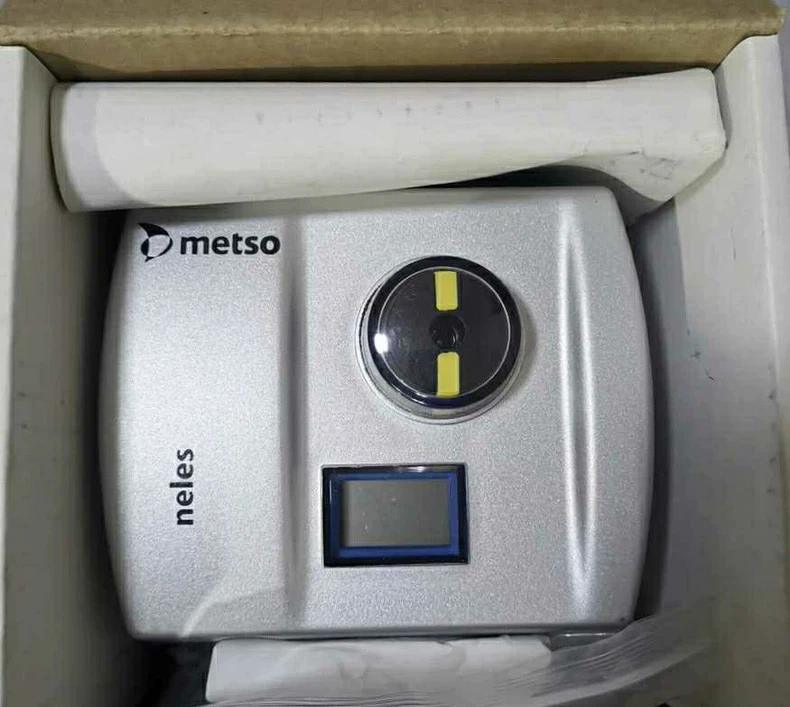
Mounting Bracket and Accessory Selection for Valmet ND9000 Positioners on Quarter-Turn Actuators
In the modern process industries—such as petrochemical refining, chemical processing, power generation, and pulp and paper manufacturing—the reliability of a control valve setup depends heavily on the physical integration between the pneumatic actuator and its control instrument. The Valmet (formerly Neles) ND9000 series smart valve positioner represents the industry benchmark for precise fluid control, utilizing dynamic microprocessors and advanced predictive diagnostics.
However, even the most advanced positioner cannot perform optimally if its mechanical linkage suffers from misalignment, physical play, or improper mounting. When deploying the ND9000 series on quarter-turn (rotary) pneumatic actuators (such as rack-and-pinion or scotch-yoke actuators driving ball, butterfly, or segment valves), selecting the correct mounting bracket, installation kit, and feedback connection components is a critical engineering prerequisite.
1. Technical Parameters for Mounting and Linkage Selection
Before configuring or ordering hardware accessories for your ND9000 setup, instrumentation engineers must verify several core physical interfaces. The primary variables include:
-
Actuator Top-Flange Interface (ISO 5211 / VDI/VDE 3845): Modern quarter-turn actuators typically feature standardized mounting hole patterns on their top housing. Common standard dimensions include footprint configurations such as $80 \times 30 \text{ mm}$ or $130 \times 30 \text{ mm}$, with pinion shaft heights extending $20$, $30$, or $50 \text{ mm}$ above the housing.
-
Feedback Shaft Interface (Pinion End Topology): The output shaft of the actuator pinion must seamlessly engage with the positioner's feedback axle. This usually requires a standardized NAMUR slot configuration or a custom-machined male driver/pin adapted to Neles-specific rotary shafts.
-
Environmental and Atmospheric Exposure: The bracket assembly must match the operating environment. Standard anodized aluminum brackets are suitable for generic plant environments, while highly corrosive maritime, offshore, or chemical bleaching applications mandate heavy-duty electro-polished 316 stainless steel mounting hardware.
2. Valmet Original Mounting Kit and Suffix Coding Architecture
Valmet utilizes a highly structured nomenclature for its accessories to ensure a seamless "drop-in replacement" or new project assembly. When ordering an ND9000 positioner pre-configured for a rotary actuator, the designation suffix codes direct the exact bracket inclusions:
Standard Rotary Installation Kits (e.g., Suffix A3, A5)
-
Suffix A3 / A5 Series: These codes represent standardized mounting kit configurations designed to adapt the ND9000 positioner directly onto Neles standard rotary actuators or generic quarter-turn pneumatic drives adhering to VDI/VDE 3845 (NAMUR) footprints. They typically bundle a rigid, low-profile metal mounting bridge, a specialized feedback arm or rotary driver adapter, and all necessary metric vibration-resistant fasteners.
-
Custom Legacy Suffixes: For proprietary valve lines (such as legacy Jamesbury or Mapag valve configurations), specialized bracket geometries are designated by the manufacturer to offset the positioner's center of gravity and ensure the feedback stroke falls perfectly within the non-contact sensor's optimal $\pm 30^\circ$ linear detection zone.
3. High-Resilience Industrial MRO Supply Chain Synergy
During fast-tracked turnaround schedules or sudden emergency plant shutdowns (unplanned downtime), a missing or incorrect mounting bracket can delay an entire control loop from going back online, causing significant commercial losses.
Industrial supply chain aggregators and high-tier distributors—such as Wuhan Yuli Automation Technology Co., Ltd. (https://yuliautomation.com)—mitigate these deployment risks by maintaining deep stock reserves of original Valmet / Neles ND9000 smart positioners (including the highly requested ND9106HN, ND9102HX8T, and ND9103PN models) alongside their respective factory-certified mounting bracket accessories.
Furthermore, high-tier supply channels establish cross-platform asset availability to support complex plant MRO demands across multiple critical categories:
-
Control System Modules & Cables: Rapid sourcing for ABB Symphony Harmony DCS hardware (such as BRC300, BRC410 controllers, and IEMMU21 termination units) coupled with dedicated, interference-shielded NKAS analog interface cables and NKCL network communication bus cables to eliminate high-frequency signal dropouts.
-
Heavy-Duty High-Dynamic Components: Ready availability of MOOG precision electro-hydraulic servo valves (such as G771K289A and G771K293A upgrade models) to maintain sub-millisecond loop responsiveness in turbine governors and heavy metallurgical equipment.
-
Combustion Safety & Position Telemetry: Strategic integration of ABB/Fireye flame scanners, Weishaupt double gas solenoid valves, and Stonel Axiom explosion-proof limit switch boxes (such as the QX2VB02HDM) to complete the valve assembly.
Leveraging a technical supplier with unified inventory access ensures that all mechanical mounting kits, communication protocols, and physical tracking serialization perfectly match factory specifications, shortening logistical lead times to the absolute minimum.
4. Engineering Field Installation and Maintenance Best Practices
Once the correct quarter-turn mounting bracket and Valmet ND9000 positioner arrive at the job site, the maintenance crew must strictly execute three core field procedures to ensure long-term mechanical integrity:
1. Zero-Backlash Alignment Verification
When bolting the bracket bridge to the actuator top flange, the technician must verify that the positioner’s internal shaft is perfectly concentric with the actuator pinion. Any angular or parallel misalignment will induce a continuous lateral load on the positioner’s internal bearings, leading to premature pneumatic seal wear. Furthermore, the feedback pin or coupler must fit tightly in the slot with zero mechanical play (backlash). Any physical looseness will be interpreted by the digital sensor as a valve position deviation, causing the positioner's algorithm to hunt and exhaust air unnecessarily.
2. Simultaneous Instrument Air Filter Maintenance
The ND9000 series positioner incorporates high-precision micro-pneumatic relays and piezo-electric pilot valves. During an MRO replacement or new installation, field personnel must replace the internal filter element of the upstream air filter regulator. Allowing legacy compressed air contaminated with condensation, pipe scale, or compressor oil carryover into a brand-new positioner will lead to immediate clogging of the micro-orifices, causing sluggish control response or a complete valve freeze.
3. Electrical Entry and Anti-Condensation Drip Loops
Upon completing the electrical wiring for the 4-20 mA HART signal, ensure that the cable gland (M20x1.5 or 1/2 NPT) is fully torqued to maintain the housing's IP66 rating. Unused conduit entries must be sealed with certified explosion-proof metal blanking plugs. Always route the incoming electrical cable with a downward-facing drip loop before it enters the positioner housing. This simple physical geometry prevents rainwater, humidity run-off, or plant washdown fluids from tracking along the cable jacket directly into the electronic compartment.