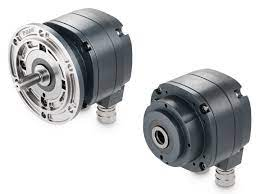
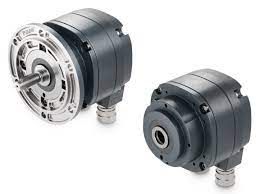
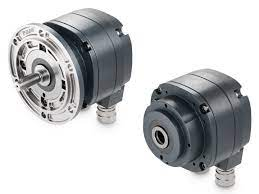
The Baumer HOG10 DN 2048 I encoder represents a highly refined incremental rotary encoder engineered for precise industrial motion control. Through exceptional mechanical stability, advanced signal output quality, and robust environmental resistance, the HOG10 DN 2048 I offers a performance level suited for demanding automation applications requiring accuracy, feedback reliability, and long operating lifetimes.
The encoder provides an incremental output of 2048 pulses per revolution, giving engineers access to fine-grained position and speed information. Its high resolution supports complex motion profiles, detailed speed regulation, and stable feedback loops, enabling smooth and precise control in modern automation environments. The incremental structure allows real-time monitoring of rotational direction and speed through two-channel A/B signals, while the index pulse supplies reference positioning for homing procedures.
Mechanically, the HOG10 DN 2048 I features a highly durable housing, designed to withstand vibration, continuous rotation, and axial loading without compromising accuracy. The solid-shaft construction ensures stable coupling with motors and drive components, reducing the risk of backlash and mechanical oscillation. Its DN shaft and 16H7 fit provide a secure and precise interface that aligns the encoder with industrial design standards.
Engineers value the HOG10 series because it combines rugged construction with exceptional signal quality. The optical sensing system maintains crisp, noise-resistant pulse output, ensuring that controllers and drives receive clean data even in environments with electromagnetic interference. The encoder’s internal electronics maintain high signal integrity over long cable distances, making it suitable for large manufacturing plants and distributed control systems.
The HOG10 DN 2048 I integrates seamlessly into automation solutions such as:
• conveyor and transport systems
• motor feedback applications
• robotics and servo drive platforms
• CNC equipment and high-precision cutting systems
• material handling equipment
• industrial pumps and compressors
Across these applications, accurate speed and position measurement plays a vital role in achieving smooth motor performance and maintaining system stability. The HOG10 DN 2048 I contributes significantly to reducing downtime, improving production efficiency, and ensuring consistent quality in automated processes.
Installation is straightforward due to the encoder’s standardized mounting system. The compact housing fits easily into tight machine spaces, while the robust shaft and coupling options provide compatibility with both new and existing mechanical frameworks. Additionally, the encoder supports a wide operating temperature range, allowing it to function reliably under thermal stress common in heavy industrial environments.
One of the strengths of the HOG10 DN 2048 I lies in its long-term reliability. Baumer employs durable bearings, shock-resistant internal components, and optimized thermal management to ensure that the encoder operates continuously without drift or degradation. Even under high-speed rotation, the optical scanning system maintains accurate output, and the housing protects delicate internal components from dust, moisture, and oils commonly found on production floors.
In terms of electrical performance, the incremental output channels maintain symmetry, consistent pulse width, and stable amplitude. The high fidelity of the signals ensures compatibility with PLCs, motor drivers, and industrial control units that rely on precise timing. Engineers implementing feedback loops can rely on the HOG10 DN 2048 I to deliver repeatable and accurate pulse trains, which are essential for real-time control logic.
Maintenance requirements remain minimal thanks to the encoder’s sealed construction and wear-resistant components. Most installations operate for years without requiring adjustments or replacements. When maintenance is needed, the encoder’s accessible design and standard connectors reduce downtime during servicing or replacement, supporting efficient workflows in maintenance operations.
The HOG10 DN 2048 I is also favored in applications where environmental conditions fluctuate or where mechanical vibration is heavy. Baumer’s mechanical engineering ensures that vibrations do not produce false pulses or degrade the optical scanning accuracy. This stability protects automation systems from erratic motion, inconsistencies, and unexpected controller responses.
Across high-precision industries such as automotive manufacturing, packaging, steel processing, robotics, and precision machining, the encoder’s accuracy and reliability help achieve operational excellence. Its ability to deliver high-resolution incremental feedback ensures that automated machinery performs predictably, efficiently, and safely.
The 2048 PPR rating offers a strong balance between resolution, controller compatibility, and pulse frequency capability. This makes the encoder versatile across a wide range of motor speeds and positioning tasks. Faster rotational speeds still produce stable and readable signals, while slower speeds benefit from the fine resolution required for delicate maneuvers.
With its high signal quality, robust mechanical design, and broad application compatibility, the Baumer HOG10 DN 2048 I stands out as a trusted encoder for advanced industrial automation. Engineers seeking reliable rotary feedback for complex industrial processes continually choose the HOG10 series for its proven performance, long service life, and ease of integration.
In summary, the Baumer HOG10 DN 2048 I offers:
• high-resolution incremental output for precision control
• rugged construction suited for heavy industrial use
• stable signal output immune to electrical noise
• easy installation and integration with existing systems
• long-term operational reliability with minimal maintenance
• compatibility with a wide range of drives, PLCs, and automation equipment
By delivering consistent and precise rotary feedback, the HOG10 DN 2048 I becomes a critical component in maintaining accuracy, efficiency, and safety across many industrial environments. Its durability and engineering excellence ensure that modern manufacturing and automation systems operate with optimal performance and reliability.