
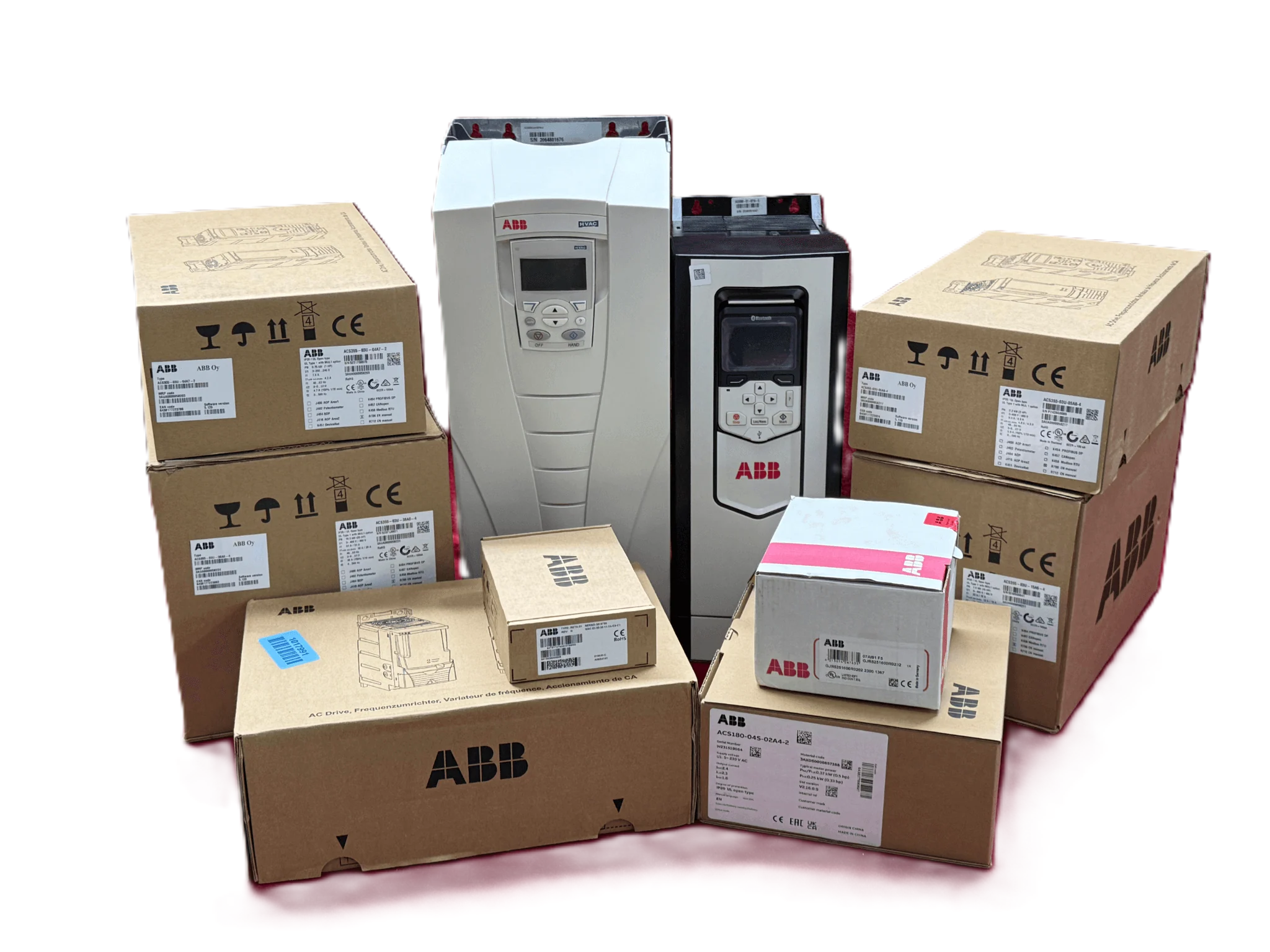
Industrial Automation with ABB PLC Systems
1. Introduction to Industrial Automation
Industrial automation is the foundation of modern manufacturing and process industries. It replaces manual control systems with intelligent digital controllers that improve accuracy, efficiency, and safety.
At the center of this transformation are Programmable Logic Controllers (PLCs), which act as the “brain” of automated systems. Among global leaders, ABB has built one of the most reliable PLC ecosystems in the world.
From production lines to power plants, PLC systems ensure continuous monitoring, real-time control, and optimized performance.
2. What is ABB PLC System?
ABB PLC systems are industrial-grade controllers designed to automate machines and processes. The most widely used platform is the AC500 series, which offers scalable solutions for small machines to complex industrial systems.
Key features include:
- Modular architecture
- High-speed processing
- Industrial communication support
- Flexible I/O expansion
- Long lifecycle reliability
The ABB PLC portfolio includes:
- AC500-eCo (compact PLC)
- AC500 standard PLC
- AC500-XC (harsh environment version)
- AC500-S safety PLC
These systems are widely used in manufacturing, energy, marine, chemical, and infrastructure industries.
3. Core Architecture of PLC Systems
A PLC system typically consists of:
3.1 CPU Module
The central processing unit executes control logic and processes input/output signals.
3.2 Input/Output Modules
These modules connect sensors and actuators to the PLC system.
3.3 Communication Modules
They support industrial protocols such as Ethernet, Modbus, Profibus, and fieldbus networks.
3.4 Power Supply
Provides stable energy for continuous operation.
3.5 Programming Software
ABB PLCs are programmed using Automation Builder, a powerful engineering environment supporting IEC 61131-3 standards .
4. ABB AC500 PLC Platform Overview
The AC500 platform is the core of ABB’s PLC ecosystem.
It supports:
- Machine automation
- Process control
- Motion control
- Safety systems
- Remote monitoring
According to ABB documentation, AC500 PLCs are designed for scalable automation from small applications to high-end industrial systems .
Key advantages:
- High flexibility
- Strong cyber security features
- Reliable long-term operation
- Easy integration with HMI and SCADA systems
5. PLC Programming and Automation Software
ABB PLC systems are programmed using Automation Builder, which provides:
- Unified engineering environment
- PLC + HMI + drive integration
- Simulation tools
- Multi-language programming support
- Reusable function blocks
This improves development speed and reduces commissioning time.
Automation Builder allows engineers to design complete automation systems from a single platform .
6. Industrial Communication in ABB PLC Systems
Modern automation requires seamless communication between devices.
ABB PLC supports:
- Industrial Ethernet
- Modbus TCP/RTU
- Profibus
- CANopen
- OPC UA integration
These protocols ensure real-time data exchange between PLC, sensors, drives, and SCADA systems.
This connectivity is essential for Industry 4.0 and smart factory environments.
7. ABB PLC in Industry 4.0
Industry 4.0 focuses on digital transformation, IoT integration, and intelligent manufacturing.
ABB PLC systems play a key role by enabling:
- Real-time data collection
- Predictive maintenance
- Cloud connectivity
- Smart diagnostics
- Remote control systems
These features allow factories to become more efficient and adaptive.
8. Industrial Applications of ABB PLC
ABB PLC systems are widely used in multiple industries:
8.1 Manufacturing
- Assembly lines
- Robotics control
- Packaging systems
8.2 Energy & Power
- Power plants
- Renewable energy systems
- Grid automation
8.3 Oil & Gas
- Pipeline monitoring
- Refinery control systems
- Safety automation
8.4 Water Treatment
- Pump control
- Filtration systems
- Flow regulation
8.5 Building Automation
- HVAC systems
- Lighting control
- Energy management
9. Advantages of ABB PLC Systems
9.1 High Reliability
Designed for harsh industrial environments.
9.2 Scalability
Suitable from small machines to large industrial plants.
9.3 Safety Integration
Supports safety PLC systems for critical applications.
9.4 Easy Integration
Works with drives, HMIs, and SCADA systems.
9.5 Long Lifecycle
Industrial-grade durability ensures long-term operation.
10. ABB Drives and Automation Ecosystem
PLC systems are often combined with:
- Variable frequency drives (VFDs)
- Servo systems
- Robotics
- SCADA platforms
This creates a complete automation ecosystem where all components communicate seamlessly.
11. Future of PLC Automation
The future of PLC systems is driven by:
- Artificial Intelligence integration
- Edge computing
- Cloud-based monitoring
- Digital twins
- Cybersecurity enhancements
ABB continues to innovate in these areas, supporting global digital transformation.
12. Conclusion
ABB PLC systems are at the heart of modern industrial automation. With their scalability, reliability, and advanced communication capabilities, they are essential for industries moving toward digital transformation.
From manufacturing to energy and infrastructure, ABB automation solutions help businesses achieve higher efficiency, lower costs, and improved safety.
As Industry 4.0 evolves, PLC systems like ABB AC500 will remain critical for building intelligent, connected, and sustainable industrial environments.